Hot take: if you’re only buying new, you’re playing the brand’s game, not the collector’s.
New watches are clean, easy, and (usually) drama-free. Pre-owned is where the real collecting starts, because it’s where the weird stuff lives: discontinued references, short-run dials, transitional models, the “they only made this for two years” quirks that never show up in boutiques. And yes, sometimes you pay less for more watch. Not always. But often enough that it changes how you build.
One-line truth: pre-owned buying rewards patience and punishes laziness.
The Real Pre-Owned Advantage: Access + Pricing Reality
Most brands price new watches like a controlled environment. Fixed retail, curated story, gentle lighting. Then the moment the watch hits the secondary market, the story collides with supply and demand, condition, documentation, and pure collector appetite. That’s especially true for pre-owned watches in the UK, where buyer interest and global resale flows can shape value in unexpected ways.
Here’s what pre-owned unlocks:
– Discontinued models that define brand eras (and aren’t coming back in the same form)
– Rare configurations: odd dial colors, region-specific releases, short-lived case sizes
– Better entry points after the initial retail premium gets shaved off
– An upgrade path: you can buy, learn, trade, tighten your tastes, repeat
Now, this won’t apply to everyone, but if you’re the type who likes collecting as a craft (not just shopping), pre-owned is the only market that gives you enough variation to develop judgment.
A stat, because feelings aren’t enough
Depreciation isn’t uniform, but the broad pattern is consistent: new luxury goods tend to take their biggest hit early, then stabilize. A classic data point people cite is that cars lose a large chunk quickly; watches aren’t cars, but the “first-owner premium” concept still shows up constantly in transaction data.
For watches specifically, platforms that publish market indices routinely show meaningful swings around hype cycles and model discontinuations. One commonly referenced benchmark is the WatchCharts Overall Market Index, which tracks secondary prices across major brands and has shown notable market drawdowns since 2022 after the peak period (WatchCharts, market index data: https://watchcharts.com).
That doesn’t mean “watches are investments.” It means timing and entry price matter more than the marketing copy.
The Trade-Off No One Escapes: Authenticity, Provenance, Condition
Look, the pre-owned market isn’t dangerous because it’s “full of fakes.” It’s dangerous because it’s full of half-truths.
A watch can be:
– authentic, but refinished to death
– authentic, but built from mismatched parts
– authentic, but missing a service history that explains why the movement looks like it survived a bar fight
– authentic, but the dial is a later replacement that quietly kills collector value
And then there are outright counterfeits, which have gotten annoyingly good in the obvious places and surprisingly good in the less obvious ones (think: correct-looking exteriors with wrong movements, or real cases paired with aftermarket dials).
So you don’t “check authenticity.” You build a case for the watch being correct.
A methodical way to verify authenticity (the specialist briefing)
When I’m doing a serious check, I want a timeline, not a pile of photos.
1) Build the identity: reference, serial, configuration
Start by locking down:
– Reference number (model ID)
– Serial number (production ID)
– Movement caliber and any movement number
– Expected dial layout, handset, bezel, crown, caseback engravings for that reference
Then cross-check against manufacturer documentation, trusted reference guides, and known correct examples. You’re not looking for “close.” You’re looking for *consistent*.
2) Match the watch to known production standards
This is where collectors get sloppy because it’s tedious.
Check:
– Dial printing: font weight, spacing, serif shapes, minute track alignment
– Lume: correct color for the era, even aging pattern, no “fresh glow” that doesn’t match the case wear
– Case geometry: lug profiles, bevels, symmetry (over-polishing changes the architecture)
– Crown and pushers: shape, knurling, logo depth
– Caseback: engraving depth, spacing, correct service markings if applicable
Here’s the thing: one oddity might be a known variant. Three oddities is usually a parts watch.
3) Service history: good news, bad news
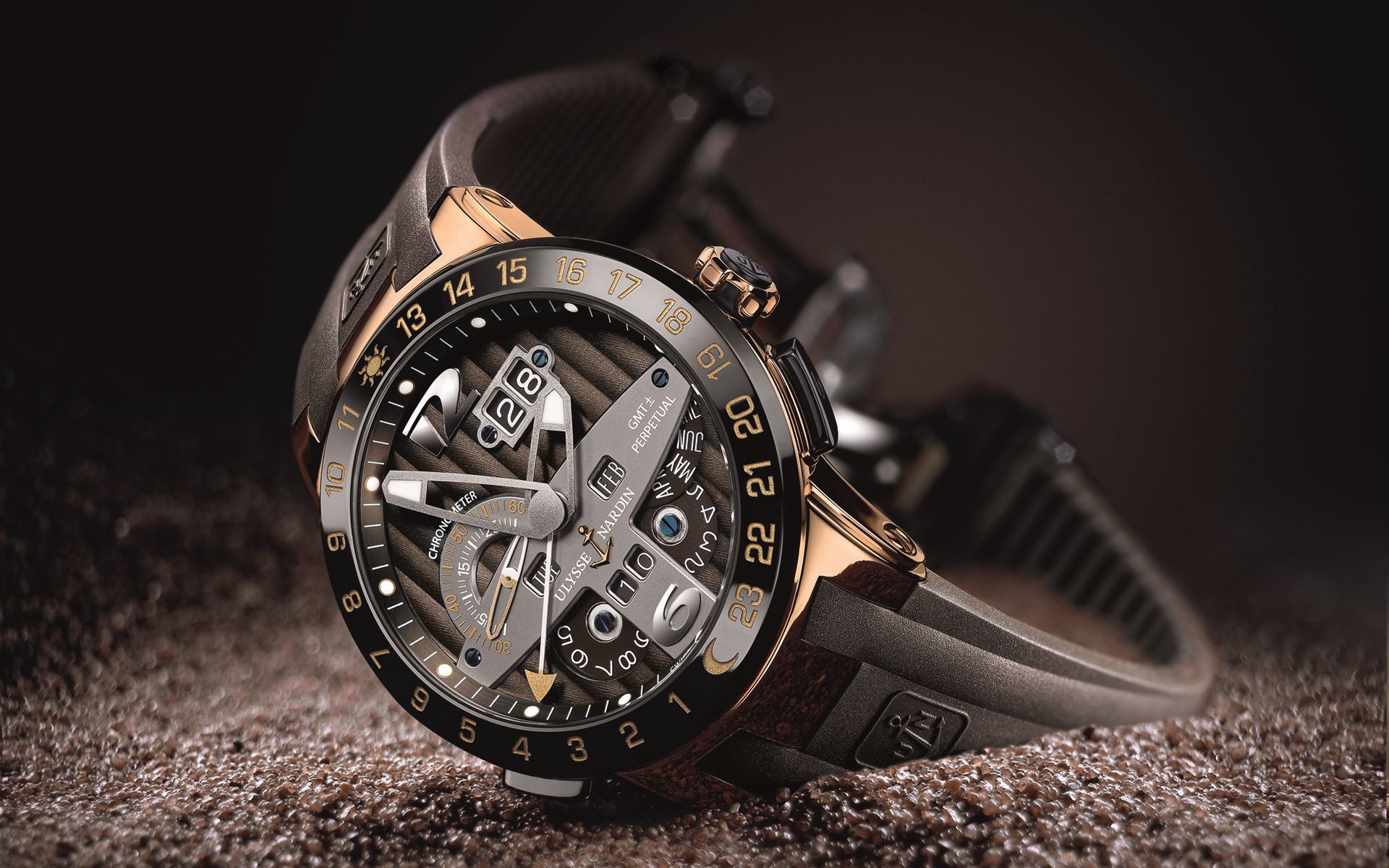
Service records are helpful, but they can also create landmines. A factory service might mean the watch runs beautifully… and also that original parts were replaced with modern equivalents.
What I want to see:
– date of service
– who performed it (brand service center, respected independent, unknown shop)
– what was replaced (hands, dial, crown, bezel insert, movement parts)
– pressure test results on sports models
If the seller can’t tell you *anything* about the last service and the watch is complicated, price the service in immediately. Don’t romanticize it.
4) Provenance: receipts beat stories
Provenance doesn’t have to be glamorous. It has to be coherent.
You’re checking whether:
– purchase receipts align with the claimed country and era
– auction lot numbers can be verified
– dealer stamps make sense (and aren’t just decorative ink)
– transfer dates form a believable chain of ownership
If it’s “from a private collection” but nothing else exists, treat it as a watch with no provenance and price it accordingly.
5) When to bring in an independent expert
If the price is meaningful to you, pay for verification. Period.
A competent watchmaker or third-party authenticator can confirm:
– correct movement finishing for the caliber
– matching case/movement eras
– evidence of tampering or swapped components
– quality of prior service work
I’ve seen this step save people from five-figure mistakes. I’ve also seen people skip it to “save money,” which is a special kind of irony.
Value isn’t “rarity.” It’s rarity + history + condition (all at once)
People love the word *rare* because it feels like a cheat code. It isn’t.
Rarity without documentation can be a trap. Condition without originality can be a mirage. A clean, correct, well-documented watch will often outperform a “rare” but questionable one simply because buyers trust it.
Think in three axes:
Rarity
Production numbers matter, but so does *survival rate*. Some references weren’t produced in huge quantities, yet plenty exist because owners cherished them. Others were common but got destroyed through hard use, making truly original examples scarce.
History (documentation + correctness)
Papers aren’t magic, but they reduce buyer anxiety. A verified, consistent story boosts liquidity. Liquidity is value’s less glamorous cousin, and collectors ignore it until they need to sell.
Condition (and the kind of condition)
There’s “looks new,” and there’s “is honest.” I’ll take honest any day for vintage.
Over-polishing, aggressive refinishing, re-luming, dial cleaning… these aren’t always “bad,” but they change what the watch *is* in collector terms. If you’re paying collector pricing, you need collector integrity.
The buying framework I actually use (messy, but repeatable)
I don’t buy pre-owned on vibes. I’ve tried. It ends badly.
I keep a simple decision structure:
1) Define the slot in the collection
Sports steel?Dress?Complication? What role does it play? If it doesn’t have a role, it’s probably an impulse buy wearing a nice outfit.
2) Set a ceiling price that includes the first service
If you can’t afford the watch plus maintenance, you can’t afford the watch. That’s not gatekeeping; that’s math.
3) Pre-qualify the seller before the watch
Reputation, return policy, transparency, willingness to provide movement photos and timing results. If a seller gets defensive, I move on. Life’s too short.
4) Score the candidate
Not everything needs a spreadsheet, but a rough score helps when your brain starts rationalizing.
A quick scoring approach that works:
– Authenticity confidence (0, 10)
– Originality/correctness (0, 10)
– Condition vs. age (0, 10)
– Documentation strength (0, 10)
– Service clarity (0, 10)
– Price vs. comps (0, 10)
Low authenticity confidence is an automatic no. No heroics.
5) Plan the exit before you enter
If you had to sell in 30 days, could you? Through what channel?At what haircut? You don’t need to be a flipper to respect liquidity.
Scams and pitfalls (the stuff that keeps happening)
Some of this is obvious. Some of it is sneaky.
Common red flags I don’t negotiate with
– price way below market with a “quick sale” excuse
– fuzzy photos, cropped angles, refusal to show movement
– mismatched serial/reference engravings
– service history that reads like fiction (“recently serviced” with no receipt, no details)
– “box and papers” that don’t match the era or reference
And yes, Frankenwatches exist everywhere. The parts are real. The watch is not.
Practical risk controls that actually work
Use these when buying remotely or from non-established sellers:
– Escrow or protected payment methods where chargeback/mediation is real
– Insured shipping with tamper-evident packaging
– A written return window (not just “trust me”)
– Time-stamped photos/video showing the watch running, setting, chronograph reset if relevant
– Third-party authentication for high-value pieces
Here’s the thing: scammers hate process. The moment you introduce structure, most of them disappear.
Building a cohesive collection (not just a pile of watches)
A strong collection has a point of view. Not a “theme” like it’s an Instagram grid, but a logic you can explain without squinting.
In my experience, cohesion comes from constraints you choose on purpose:
– era focus (e.g., 1960s tool watches, early neo-vintage, etc.)
– design language (case shapes, dial styles, bracelet architecture)
– movement interest (manual wind chronographs, early automatics, high-beat, quirky calendars)
– brand lineage (tracking reference evolution across generations)
A weirdly effective trick: pairing timelines
Instead of buying random great watches, buy chapters.
Start with a foundation piece that defines your baseline. Then add a predecessor. Then add the refinement that came later. Suddenly you’re not just owning three watches; you’re holding a narrative about design and engineering decisions over time.
Short section, but it matters: this approach kills impulse buying fast.
Budgeting for gaps (the collector skill nobody brags about)
A gap is good. It means your taste is sharper than your wallet, which is how it should be.
Do a quarterly gap check:
– What era or function is missing?
– Is the missing slot a “must,” or just curiosity?
– If values drop 15%, would you still want the same target?
Keep a budget envelope for the gap, and don’t raid it for distractions. I’ve seen more collections ruined by “good deals” than by bad watches.
Sustainability and the quieter upside
Buying pre-owned is also just… sane. You’re extending the life of a mechanical object built to be repaired for decades. Less demand for new production.Less waste. Fewer “manufactured scarcity” games.
And if you care about the romance of watches at all, this part lands: a pre-owned watch comes with a past. Sometimes documented, sometimes just implied in the wear. That history is the point (or at least part of it).
Pre-owned collecting isn’t for the impatient. It’s for the person who wants to get good at this, one disciplined decision at a time.